
Return Everything
Living free from the fear of losing something and not feeling weighed down by the need to control everything.

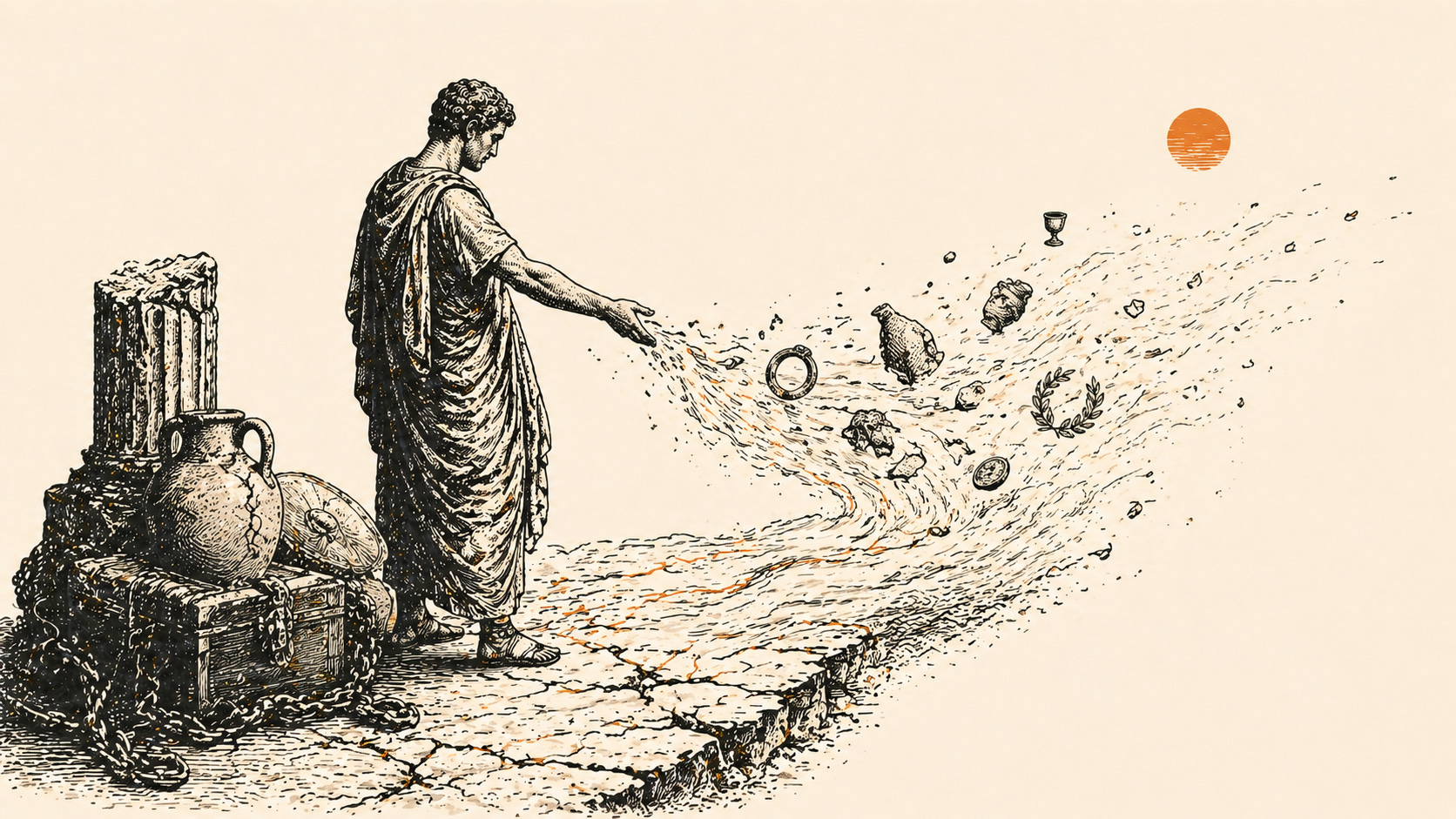
Nothing lasts forever. Everything—objects, relationships, and roles—keeps moving forward in time, whether we want it to or not. We try to hold on, but life keeps going. Underneath all this change is a simple truth we often miss. The real discomfort isn’t from losing something, but from thinking we could have kept it forever.
Believing we can hold onto things creates a quiet tension.
It makes us feel we have to protect and control what we have. This idea leads to fear, so even when we have something, we worry about losing it. We start trying to control things to avoid loss.
Instead of living, we focus on guarding what we have. Over time, this guarding turns into restlessness, and our peace depends on things staying the same, which they never do.
A new way of seeing things can ease this tension.
Letting go doesn’t mean we have to reject what’s here now. It’s about changing our perspective. Nothing really belongs to us forever. What we think we own is just something we have had for a while, thanks to certain circumstances coming together.
When we understand this, we can relax our grip.
We can appreciate what we have without being afraid. We still care, but we don’t feel the need to control everything. This lets us enjoy the present moment without always worrying about losing it.
Seeing things this way doesn’t mean we stop caring or being involved. Instead, it helps us act with more clarity. Our actions come from awareness, not from anxiety. We become more present rather than always looking ahead.
With this clarity, we find a quiet steadiness. Losing things doesn’t feel like a threat to who we are.
We don’t need to control everything to feel stable.
Instead, we live in a way where we don’t cling to anything, but we still experience everything deeply.
The Illusion of Ownership
At first, ownership seems clear.
We give things names, set labels, and draw boundaries to create order and stability. But underneath, there is a quieter truth. What we hold now existed before us and will last beyond us. What we call possession is really just a temporary arrangement, not something permanent.
We create the idea of ownership to feel secure. The mind sets clear limits on things, relationships, and roles, and calls them mine. This word is powerful. It shapes our identity and how we see the world. Through this, attachment grows. What was once just experienced now feels like something we have to keep.
Attachment leads to a chain reaction. Fear soon follows. We stop seeing loss as a normal part of life and start seeing it as a threat. Change begins to feel like a problem. As a result, we focus on control, working hard to hold on to what we have and avoid any kind of loss.
This pattern might seem natural, but it comes from how we see things, not from reality itself. Believing in permanent ownership makes us feel we need to protect what we have. That need creates tension, which leads to unease.
If we look more closely at our perceptions, we can see things differently. Ownership feels less rigid. What is here now becomes something to experience, not something to own. This change eases attachment and lessens fear. The urge to control fades.
Clarity develops when perception aligns more closely with the nature of change. When our view matches the true nature of change, we gain clarity. From this, we find a steadier and more peaceful way to relate to the world.
The Hidden Cost of Holding On
Holding tightly often appears as a form of protection. The instinct suggests that what is guarded carefully will remain secure. Yet beneath this effort, a constant tension begins to build. The mind becomes alert to every small shift, watching for signs of change. It starts to anticipate loss even when nothing has yet been lost. Movement, which is natural to life, begins to feel like a threat that must be resisted.
This resistance quietly consumes energy. Attention is no longer placed on living fully in the present moment. Instead, it is directed toward preserving what already exists. Peace becomes dependent on stability. Joy becomes fragile, easily disturbed by the possibility of change. Even moments of gain carry a hidden weight, because the awareness of losing them follows closely behind.
Control emerges as a response to this discomfort. Plans are carefully constructed. Expectations are formed with precision. Outcomes are observed and measured in the hope of reducing uncertainty. There is an attempt to bring order to what is inherently fluid.
Yet control never reaches completeness. Life does not align itself with every intention. Situations shift in ways that cannot always be predicted. Outcomes evolve despite effort. No structure, no plan, and no expectation can fully contain the movement of existence.
As this realization deepens, the strain becomes more visible. The tighter the grip, the greater the pressure felt within. Effort increases, yet ease diminishes. What was meant to create security begins to create restlessness instead.
A different understanding gradually takes shape. Protection through control is limited. Stability cannot be forced through resistance. When the grip softens, tension begins to ease. Movement is no longer seen as an enemy, but as part of the natural order.
In this shift, energy returns to the present. Attention becomes clearer. Peace is no longer dependent on holding everything in place. It arises from aligning with change rather than opposing it.
This is a premium post. Upgrade, if not already, to get full access and support my work. If you liked the blurb, then please hit the like ♥️ button to help this post get seen by others.
